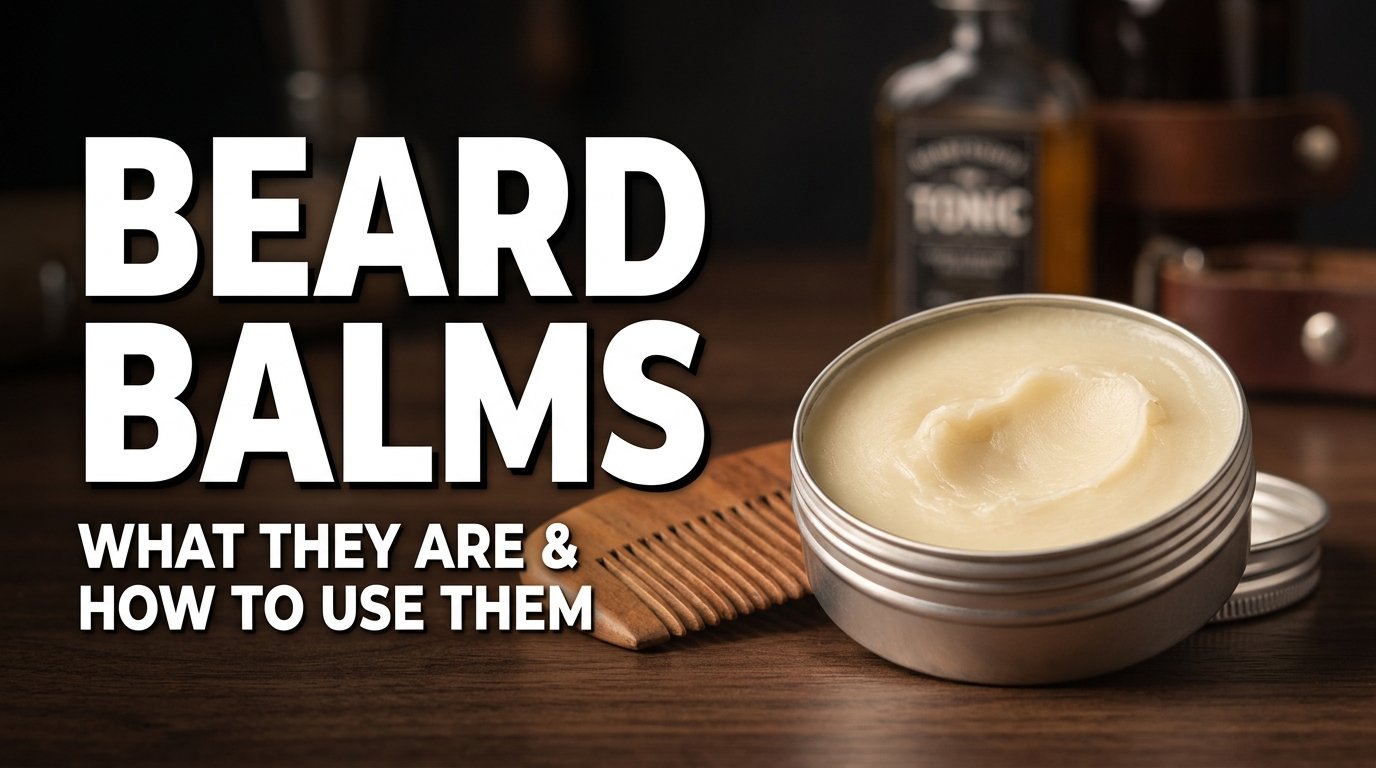
Beard balms are leave-in products made from butters, oils and wax. They soften your beard, calm flyaways and give light control over its shape. You scoop out a small amount, warm it in your hands, work it through your beard and comb it into place. This guide covers what is inside a balm, how it works and how to use one properly.
Quick Answer: Beard Balms at a Glance
| Question | Short answer |
| What is it? | A leave-in mix of butters, oils and wax for your beard |
| What does it do? | Softens hair, tames flyaways, adds light hold and shine |
| Does it grow a beard? | No. It only conditions the hair you already have |
| Who benefits most? | People with medium to long, dry, or frizzy beards |
| Who can skip it? | People with very short stubble, who may only need oil |
| How much to use? | About a pea-sized amount to start |
| How often? | Daily or a few times a week, depending on your beard |
What Are Beard Balms?
A beard balm is a soft, waxy beard product that you leave in. You don’t rinse it out. Most balms come in small tins or jars and have a texture somewhere between a thick cream and a soft candle.
Think of a beard balm as a cross between a conditioner and a light styling product. It softens the hair and helps it stay in place.
Balm is one of the “finishing” products in a beard routine, along with beard oil, beard butter and beard wax. The differences are explained below.
What Is Inside Beard Balms?
Every brand has its own recipe, so always read the label on the tin you own. Most balms use the same building blocks.
Butters
Butters make the balm thick and soft. Common ones are shea butter, cocoa butter and mango butter. They add softness and moisture.
Carrier oils
Carrier oils are plant oils that add shine and a smoother feel. Common examples are jojoba, argan, coconut, grapeseed and sweet almond oil. Some feel light and some feel heavy.
Wax
Wax gives the balm its hold. Beeswax is the most common. More wax usually means more hold, but also a stiffer feel. Some vegan balms use plant-based waxes instead. [VERIFY: name one plant wax, such as candelilla or carnauba, before publishing]
Optional extras
Some balms add vitamin E, essential oils, or fragrance. These are mostly for scent or as marketing extras. Fragrance and essential oils are also common triggers for skin irritation, so it helps to know if they are in your balm.
Beginner tip: If you have nut allergies, check the label for shea, almond, or coconut before you buy or use any balm.
How Do Beard Balms Work?
Beard hair is made of a protein called keratin. When it is dry, the surface feels rough, looks dull and the hairs stick out in different directions.
A balm helps in three simple ways:
- It coats the hair. Butters and oils form a thin layer that makes the beard feel smoother and look shinier.
- It helps slow moisture loss. The layer helps hair hold on to moisture, so it feels less dry.
- It adds light hold. Wax helps hairs stick together and lie flat.
That is all a balm does. It is a coating and shaping product, not a treatment that changes how your beard grows.
What Do Beard Balms Do (and Not Do)?
What they can do
- Soften your beard. This is the biggest benefit for most people.
- Reduce flyaways and frizz.
- Help you shape your beard, especially the outline and the outer layer.
- Add a healthy-looking shine.
- Add a light scent, if the balm is scented.
- Give some moisture to the skin underneath if you work it in, though oil is usually better for that.
What they cannot do
- They cannot make your beard grow faster or fill in patches. Beard growth depends mostly on genetics, age and hormones. If you are worried about patchy growth or sudden hair loss, speak to a doctor or dermatologist.
- They cannot cure beard itch, dandruff, or skin problems. A balm may make a dry beard feel more comfortable. If you have ongoing itching, redness, flaking, or painful bumps, speak to a doctor or dermatologist, because these can have medical causes.
Beard Balm vs Beard Butter vs Beard Oil vs Beard Wax
Beginners often mix these up and some brands use the names loosely. Here is the usual difference.
| Product | Texture | Main job | Hold | Often used for |
| Beard oil | Thin liquid | Moisturize hair and skin | None | Short to medium beards, daily softness |
| Beard butter | Soft, creamy, shea-heavy | Deep softness | Very light | Dry or coarse beards |
| Beard balm | Soft, waxy (butters plus beeswax) | Soften and lightly control | Light to medium | Medium to long beards, frizz |
| Beard wax | Thick and firm | Strong shaping | Strong | Long beards, mustaches, styled shapes |
A simple way to think about it:
- Want softness only? Oil is the simplest choice.
- Want extra softness and moisture? Butter fits here.
- Want softness plus some control? That is where beard balms fit.
- Want a firm, styled shape? Wax gives the most hold.
Some brands label the same product as “balm” or “butter,” so check the ingredients and description rather than only the name. Many people put oil on first and balm on top. That is optional, not a rule. For more detail, see our guide on beard oil vs beard balm.
Who Needs a Beard Balm?
Not everyone does.
A balm makes sense if you:
- Have a beard longer than about an inch or two
- Deal with frizz, flyaways, or a dry, coarse feel
- Have a short beard that is curly, thick, or unruly
- Want a quick way to look neat without a long styling routine
You can probably skip a balm if you:
- Have very short stubble. Balm can feel heavy and oil or nothing may be enough.
- Have very oily or acne-prone skin. Heavy butters and wax can feel greasy. If you use one, keep it on the hair and away from the skin and ask a dermatologist if you break out.
- Have allergies to nuts or essential oils. Read labels and patch test first.
- Dislike a waxy feel. A lighter product may suit you better.
Pros and Cons of Beard Balms
| Pros | Cons |
| Softens the beard | Can feel greasy if you use too much |
| Tames flyaways with light hold | Hold is lighter than wax |
| Quick leave-in routine | Can build up if you don’t wash your beard |
| Comes in scented and unscented styles | Some contain nut oils or fragrance that irritate certain people |
| Helps guide the beard’s shape | Not needed for very short beards |
| Small tins are easy to carry | Won’t grow your beard or fix skin problems |
How to Use Beard Balms Step by Step?
Step 1: Start with a clean beard
Wash your beard with a gentle beard wash or shampoo. Balm on top of dirt or old product does not work well. Avoid harsh bar soap, which can dry your beard out.
Step 2: Damp or dry?
Advice differs here. Some people apply balm on a slightly damp beard after a shower and others prefer a fully dry beard for better hold. Try both and keep whichever gives you a smoother finish. If the balm feels patchy or won’t spread on a damp beard, try it dry.
Step 3: Scoop a small amount
Scrape the back of your thumbnail across the balm to lift out a pea-sized amount. This keeps the tin clean and stops you from taking too much. Long beards may need more.
Step 4: Warm it in your hands
Rub the balm between your palms or fingertips until it melts into a smooth layer. If it stays lumpy, it will clump in your beard.
Step 5: Work it through
Massage it into the beard from roots to ends, including the underside and the neckline. Keep your fingers flat and work gently if you also want it on the skin.
Step 6: Comb or brush
Use a beard comb or brush to spread the balm evenly and remove clumps. If your beard is long, separate the sections and work balm between them.
Step 7: Style and adjust
Shape your beard the way you like. Add a tiny extra amount to the outer hairs if flyaways remain. If it feels stiff or greasy, use less next time.
[ADD MY EXPERIENCE: describe your own routine, how much you use and how your beard feels afterward]
Two Ways to Use Balm: Conditioning vs Styling
You can use the same balm in two ways:
- For conditioning: work it through the whole beard, from root to tip. This gives softness.
- For styling: use a very small amount on the outer layer only. This tames flyaways and holds the shape.
Many people do both, using more for softness on dry days and less for a neat finish on others.
How Often Should You Use Beard Balm?
There is no single rule. Some people use a small amount every day, while others use it a few times a week. Dry, coarse beards often like more frequent use. Short or oily beards usually need less.
Watch how your beard responds. If it looks greasy or heavy, use less or skip a day. If it feels dry or frizzy, add a little more, or add a beard oil underneath.
Wash your beard regularly so balm doesn’t build up. How often depends on your skin and beard.
Can You Use Beard Balm on a Mustache, Stubble, or Head Hair?
- Mustache: Yes. A tiny amount can tame stray hairs and hold the shape. For a very firm shape, wax is stronger.
- Stubble: You can, but you may not need it. Use a very small amount, or use oil instead.
- Head hair: Some people use a little balm on hair as a light styling product. It is made for beards, so start with a very small amount and check the label. [VERIFY: only keep this line if you’re comfortable with it]
How to Choose a Beard Balm: What to Read on the Label?
You don’t need to buy anything to learn this. It just explains what to look for.
- Hold level: Balms can be light, medium, or stronger hold. Brands don’t use a standard scale, so read the description and reviews. [VERIFY: check against a few product pages]
- Ingredient list: A short, clear list is easier to understand. Look for familiar butters, oils and wax and watch for nuts or strong fragrance if you have allergies or sensitive skin.
- Scent: Some are unscented and some smell woody, citrusy, or sweet. If you wear cologne, a mild balm avoids clashing.
- Size: A small tin can last a good while, since you only use a little each time.
- Reviews: Read the lower-star reviews too. They usually mention real downsides like greasy feel, weak hold, or strong scent.
Ready to compare options? See our best beard balms guide.
Can You Make Beard Balm at Home?
Many DIY recipes use beeswax, shea butter and a carrier oil. Some people enjoy making their own. A few honest points:
- Cleanliness and ingredient quality matter. Homemade products have no company testing behind them.
- Patch test any homemade mix, especially if it has essential oils.
- Ratios change the texture. It may take a few tries to get a balm you like.
If you are a beginner, a ready-made balm from a known brand is simpler and more consistent. If you have sensitive skin, speak to a dermatologist first.
Common Mistakes With Beard Balms
- Using too much. This is the most common mistake. It makes a beard look greasy and heavy.
- Not warming it first. Cold balm clumps and spreads unevenly.
- Applying it to a dirty beard. Wash first.
- Expecting it to grow a beard. It only conditions what is already there.
- Ignoring the skin underneath. Balm works mostly on the hair. If your skin feels dry, oil may help more.
- Never washing the beard. Balm can build up over time.
- Ignoring irritation. If you get redness, burning, or bumps, stop using it. If it continues, speak to a doctor or dermatologist.
- Choosing by scent alone. Ingredients and hold matter too.
Frequently Asked Questions About Beard Balms
1. What is beard balm used for?
Beard balm is used to soften the beard, calm flyaways and add light hold and shine. It works best on medium to long beards. It does not make hair grow.
2. Is beard balm better than beard oil?
Neither is better for everyone. Oil is thin and mainly moisturizes, while balm adds light control on top of conditioning. Short beards often do well with oil and longer or frizzier beards often like balm.
3. Does beard balm help beard growth?
No product can guarantee faster growth or fill in patches. A balm conditions the hair you already have. If you’re worried about thin or patchy growth, speak to a doctor or dermatologist.
4. Should I apply beard balm on a wet or dry beard?
Both are used. A slightly damp beard after a shower takes product evenly and a dry beard can give better hold. Try both and keep what works for you.
5. Can beard balm cause acne or breakouts?
Heavy butters and waxes can clog pores for some people if they get on the skin. Keep the balm mainly on the hair and use less if you’re prone to breakouts. If skin problems continue, speak to a dermatologist.
6. Can I use beard balm on a short beard?
You can, but you may not need it. Short beards often feel fine with oil or regular washing. If you try balm on stubble, use a very small amount.
Conclusion: The Bottom Line on Beard Balms
Beard balms are simple, useful products for people with medium to long beards. They soften the hair, calm flyaways and give light control. They will not grow a beard or treat skin problems, so keep your expectations realistic.
If you’re just starting out, remember the basics: use a small amount, warm it in your hands, comb it through and wash your beard regularly. If you have sensitive skin or allergies, read the ingredient list and patch test first. Once you understand how beard balms work, choosing one gets much easier.